MOVERS & SHAPERS: A DANCE PODCAST

The personal stories, experiences, and ideas from those who shape the dance field.

“I love Movers and Shapers: it focuses my mind on the important things in life: I love the care with which it’s choreographed(!).” Review, Apple Podcasts

“This podcast sounds so vivid and interesting! I am really grateful to be able to hear all these stories from all of these artists. This podcast is a work of art.” Review, Apple Podcasts

Partnership and Advertising Opportunities: Podcast Media Kit

Home » Podcasts

Movers & Shapers: Anna Pasternak and Blair Brown with Movement Exchange

By Podcast

PODCAST 162: Anna Pasternak and Blair Brown with Movement Exchange

Release Date: 8.4.23


TO DOWNLOAD PODCAST OR LISTEN:

    • Apple: Subscribe, Listen, Rate Us HERE

    • Spotify: Follow and Listen HERE

    • Any Smartphone Podcast app: Subscribe and Listen


Anna Pasternak and Blair Brown with Movement Exchange 

Building Community through Arts Education

Episode 162: Show Notes

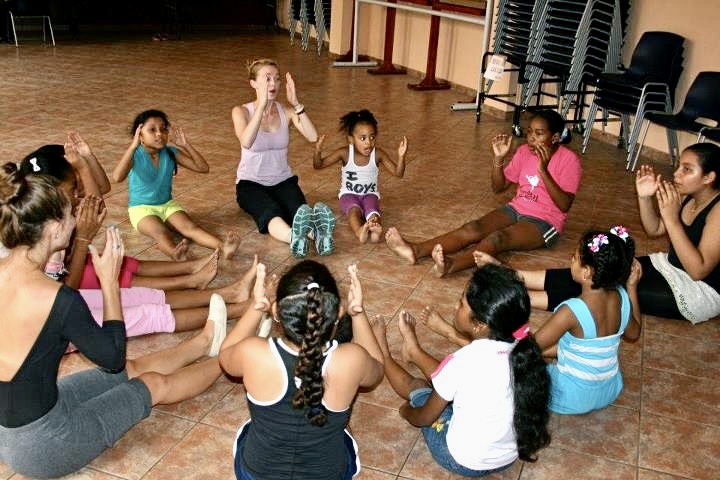
Our guests today are passionate about dance, dance education, and serving communities. Join us today as we share a podcast with you featuring an interview with Anna Pasternak, the Founder of Movement Exchange, and Blair Brown, the organization’s current Executive Director. During our conversation, we hear about their journeys with dance, what captivates them about the arts, and how their life paths led them to Movement Exchange. Movement Exchange is an international non-profit organization that provides accessible and sustainable dance education to youth of all ages. They share all about how it started, how it evolved, and their plans for expansion. We hear more about their university chapters and international volunteer dance exchanges and how they build leadership development, cultural awareness, and a passion for community building through arts education. To hear more about their year-round sustainable programs in underresourced communities, be sure not to miss out on today’s episode with Anna and Blair from Movement Exchange!

Key Points From This Episode:

  • Anna shares her personal history and transformative journey with dance.
  • What it was about dance that drew her in and sparked her love for dance.
  • She elaborates on her aspirations after high school and how getting into Harvard impacted her dance journey.
  • A gift from Harvard: how anthropology influenced and broadened her knowledge of culture and dance.
  • Fly and be free; the pull to see and experience everything the world had to offer.
  • Anna talks about the exciting journey of founding the Movement Exchange.
  • Her biggest worry stepping down as Executive Director at Movement Exchange.
  • What it meant to Anna working at and being part of Movement Exchange.
  • We hear from Blair about who she is, where she’s from, and what brought her to dance!
  • Blair expresses what it is about the arts that captivate her.
  • Her plans for after high school: ditching the pointe shoes for modern dance.
  • She elaborates on the biggest shift that altered her life as an artist: dance education.
  • Meeting Anna and Movement Exchange; the second jump in her career.
  • She elaborates on her thesis topic and completing her MFA.
  • We discuss the realization of the barrier to dance, even in the USA.
  • Blair expresses her favorite aspects of the role she holds at Movement Exchange.
  • They talk about any pushback experienced with Movement Exchange (and how they counter it).
  • How you can get involved in the Movement Exchange programs.

“There will be nothing in my life that will be as important or have made me as happy as running Movement Exchange.” — Anna Pasternak
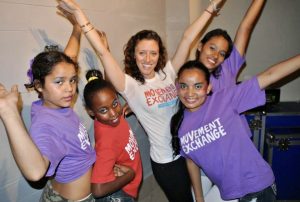
Anna Pasternak with Movement Exchange

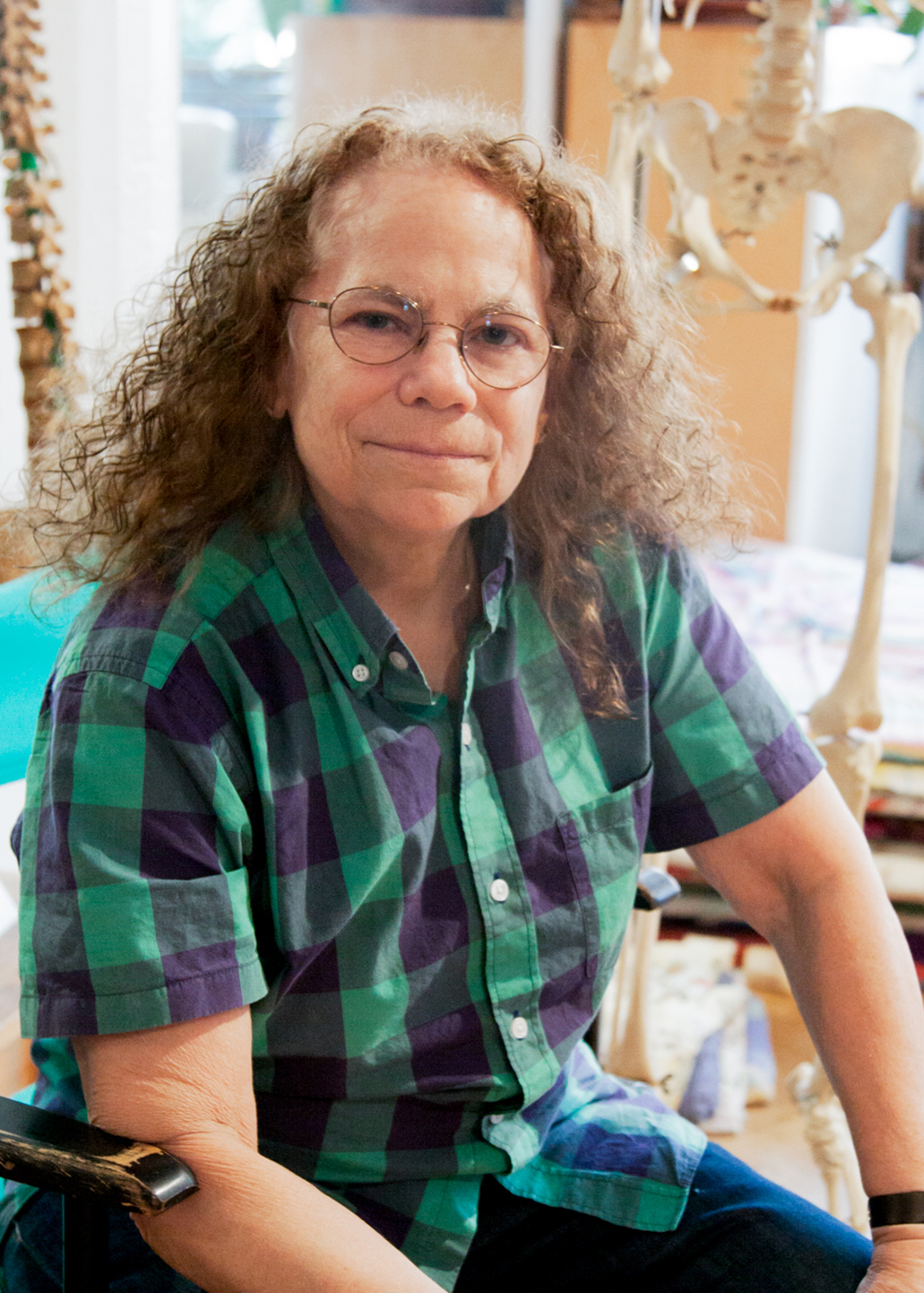
Anna Pasternak, founder of Movement Exchange, was 25-years-old and working in international development when she dreamed of a way for dancers to make a difference in the world. She asked, “How can dance education reach underserved populations, and how can trained dancers use their skills to give back to the world?” It was her work with Global Brigades in the rural and indigenous regions of Panama that connected Anna to the dance community of Panama, and subsequently inspired her vision for Movement Exchange. Like many young dancers, Anna spent endless hours in a dance studio and thought she was on the path to becoming a professional dancer. However, her interdisciplinary studies at Harvard and years living abroad allowed Anna to look at dance from a different perspective. Intent on the idea of creating a global community of like-minded dancers passionate about service and social justice, Anna founded Movement Exchange in 2010. Anna’s work has been featured in the Harvard Magazine, as a young artist on National Public Television, among other international publications. Anna received her BA from Harvard University and her MS, Nurse Practitioner from UCSF. She previously studied dance at the San Francisco High School of the Arts, the National Arts School of Cuba, and received her early training with Shely Pack-Manning. In 2011, she was a Fulbright Scholar in Mexico City. She is now a proud member of the board of directors for Movement Exchange and continues to guide the organization.

 “Dance is social. It’s all about community and how do we connect with that and make our communities stronger.” — Blair Brown

Blair Brown with Movement Exchange

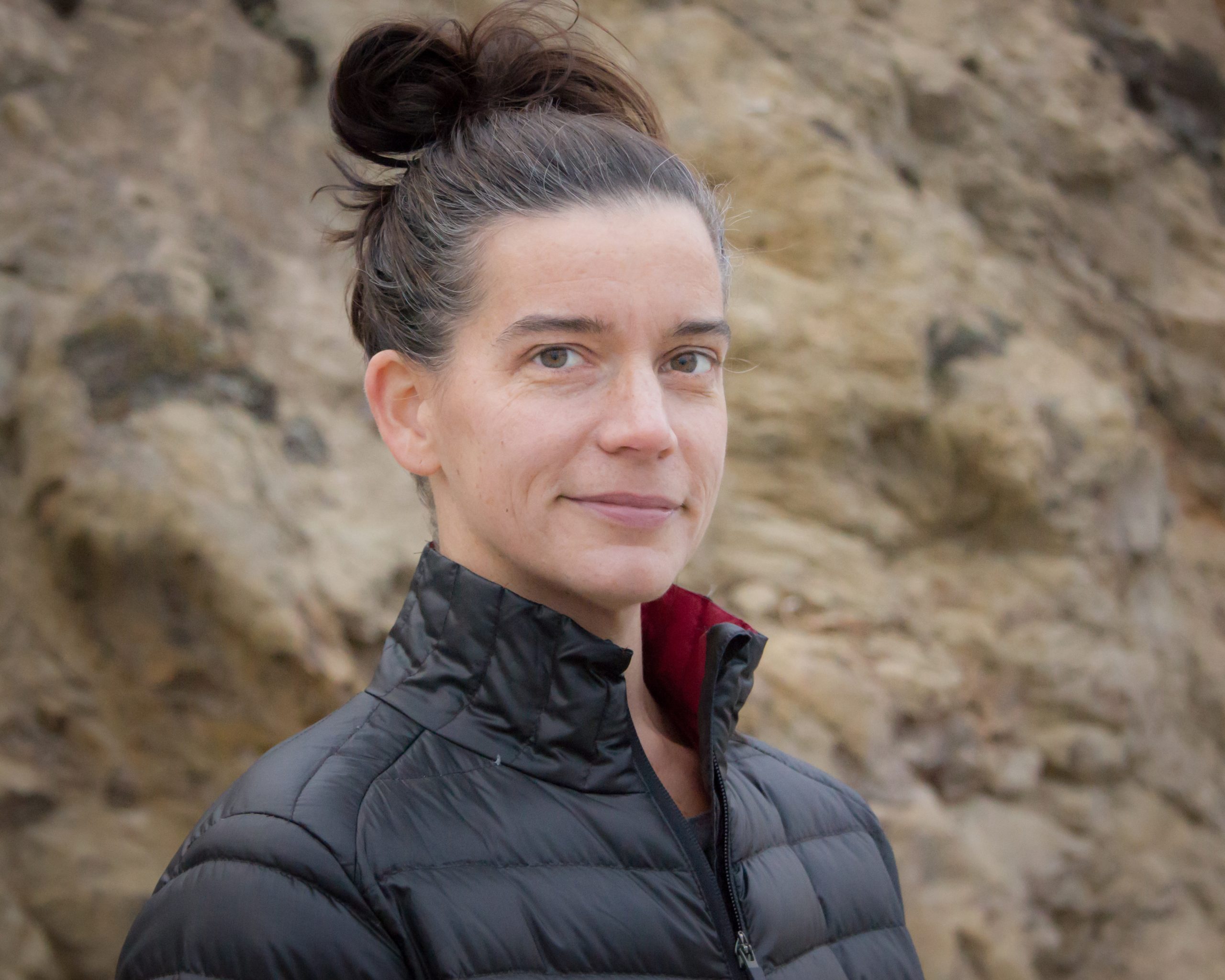
Blair Brown (MFA, BA) received her BA in Dance from Loyola Marymount University and her MFA in Dance from University of California, Irvine. Since 2012 she has been involved with the non-profit organization Movement Exchange taking part in and leading international exchanges focused on building community through dance. For 10 years she was teaching dance in public schools, community centers, artist residency programs and more in California and New York before taking the position of Executive Director for Movement Exchange. Her career has been led by the passion to create more accessible opportunities for all students to have exposure to arts education. In New York City she created a comprehensive yoga, dance and health program at Storefront Academy Harlem and then spent five years as the dance specialist at Bronx Charter School for the Arts where she created a sequential curriculum for the dance program, oversaw implementation of new arts integration curriculum, and choreographed five productions per year. She has been a big proponent of dance and media technology having created four dance films that have won awards both domestically and internationally. She also used her background in film and media to integrate technology into the dance classroom. Her research has centered around the effects of service learning on developing artists and how experiential learning involving service and cultural exchange can have a lasting impact on one’s artistry and career. She has presented at NDEO conferences and continues to be an active member of the dance education community.


Links Mentioned in Today’s Episode:

Revelations by Alvin Ailey

Pittsburg Ballet Theatre

Martha Graham

Le Moyne Dance 

Bob Fosse

San Francisco High School of the Arts

Harvard University 

The Theatre Oppressed, Brazil 

‘The Theatre of the Oppressed’ 

Habitat for Humanity

Indiana University 

UC Irvine 

Guna People (Atlas of Humanity)

University of Panama

Loyola Marymount University

Trinity Laban

NDEO Conferences

Podcast produced by: The Moving Architects
Interviewer: Erin Carlisle Norton
Movers & Shapers: Mark Morris

By Podcast

PODCAST 161: Mark Morris

Release Date: 7.31.23

TO DOWNLOAD PODCAST OR LISTEN:

    • Apple Music: Subscribe, Listen, Rate Us HERE

    • Stitcher: Subscribe and Listen HERE

    • Spotify: Follow and Listen HERE

    • Any Smartphone Podcast app: Subscribe and Listen


Around the World with Mark Morris

Episode 161: Show Notes

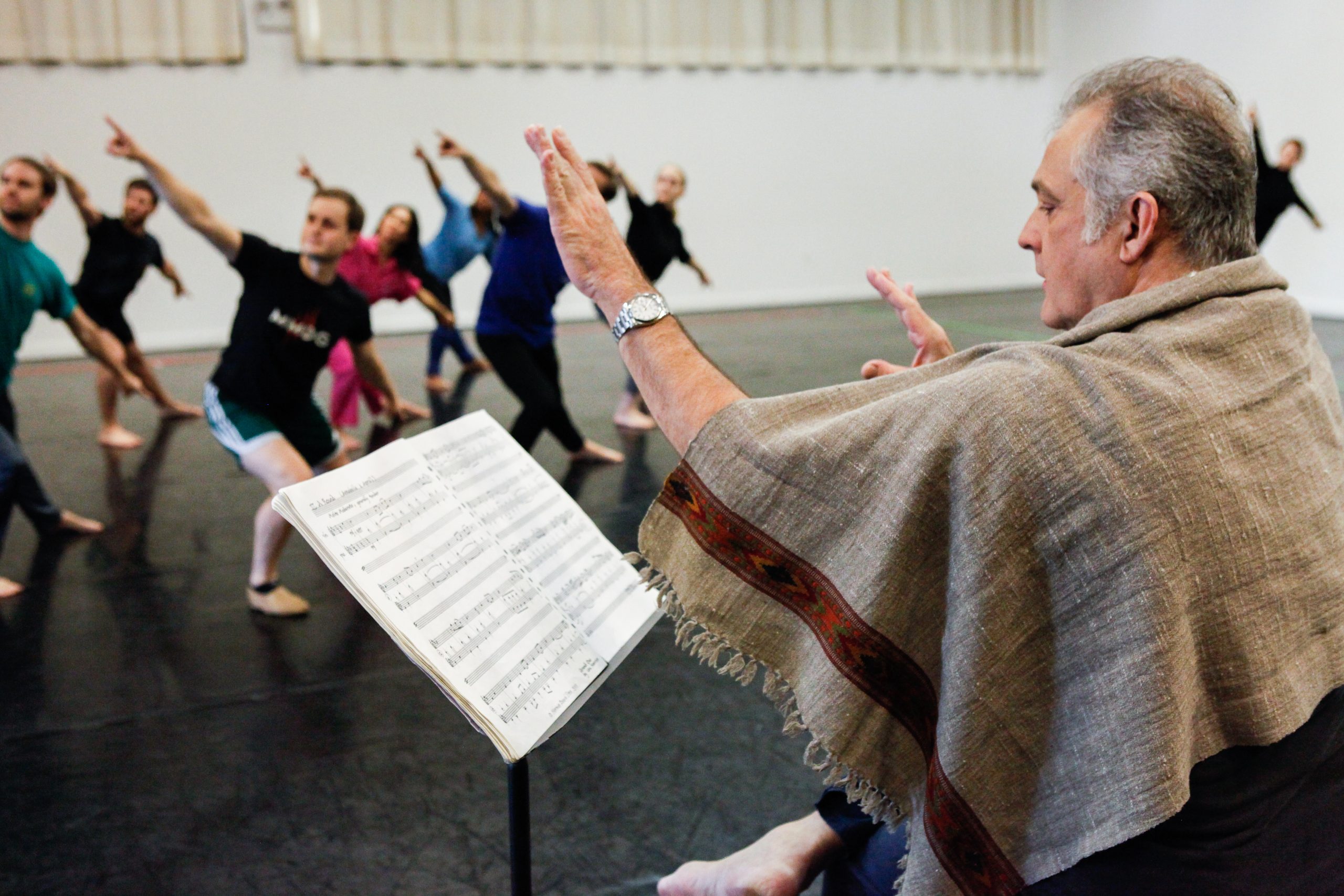
From the age of seven, Mark Morris was enamored with dance. Immersing himself in everything from flamenco to Israeli folk to ballet to modern, Mark has lived, trained, and worked in many different parts of the world. In this episode, Mark takes us on a journey from the audition that signaled the start of his career to the Mark Morris Dance Company’s first show in 1980 to his years in Brussels, where he did his “grandest work.” We also take a look at the work that Mark devotes his time to these days, which involves choreographing “dances of the future” that are only intended to be seen by the public after his death.  His life has been eventful, to say the least, and this episode will give you a taste of the passion and flair that epitomize Mark Morris!

Key Points From This Episode:

  • Where Mark’s love for dance originated.
  • Different dance forms that he has been drawn to during his life.
  • How his life changed when he was just 11 years old.
  • Mark’s experience training and working overseas.
  • Why he moved to New York and the various companies he danced for while there.
  • The driving force for the founding of the Mark Morris Dance Group.
  • Mark Morris Dance Group’s first show and how the company evolved from there.
  • Some of Mark’s career highlights.
  • Where he did his grandest work.
  • The contradictory attitudes that he dealt with during his time in Brussels.
  • How the Mark Morris Dance Center came to be.
  • Where Mark finds inspiration to continue to choreograph.
  • Insight into his “dance of the future” concept.
  • The profound role that music plays in his life.

“I like excellence and I like surprise. I’m very interested in work that engages me and that’s not necessarily what everybody else agrees with.” — Mark Morris

MARK MORRIS, praised as “the most successful and influential choreographer alive, and indisputably the most musical” (New York Times), was born on August 29, 1956, in Seattle, Washington, where he studied with Verla Flowers and Perry Brunson. In the early years of his career, he performed with the companies of Lar Lubovitch, Hannah Kahn, Laura Dean, Eliot Feld, and the Koleda Balkan Dance Ensemble. He formed the Mark Morris Dance Group (MMDG) in 1980 and has since created over 150 works for the company. From 1988 to 1991, he was Director of Dance at the Théâtre Royal de la Monnaie in Brussels, the national opera house of Belgium. In 1990, he founded the White Oak Dance Project with Mikhail Baryshnikov. Morris is also an acclaimed ballet choreographer, with twenty-two works commissioned by ballet companies worldwide.

Noted for his musicality, Morris has been described as “undeviating in his devotion to music” (The New Yorker). He began conducting performances for MMDG in 2006 and has since conducted at Tanglewood Music Center, Lincoln Center, and BAM (Brooklyn Academy of Music). In 2013, he served as Music Director for the Ojai Music Festival. Morris also works extensively in opera, directing and choreographing productions for The Metropolitan Opera, New York City Opera, English National Opera, and The Royal Opera, Covent Garden, among others.

He was named a Fellow of the MacArthur Foundation in 1991 and has received eleven honorary doctorates to date. He has taught at the University of Washington, Princeton University, and Tanglewood Music Center.

He is the subject of a biography, Mark Morris, by Joan Acocella (Farrar, Straus & Giroux), and Marlowe & Company published a volume of photographs and critical essays entitled Mark Morris’ L’Allegro, il Penseroso ed il Moderato: A Celebration. Mark Morris: Musician-Choreographer, by musicologist Stephanie Jordan, was released in 2015. Morris’s memoir, Out Loud, co-written with Wesley Stace, was published in paperback by Penguin Press in October 2021.

A Doris Duke Artist, Morris is a member of the American Academy of Arts and Sciences and the American Philosophical Society, and has served as an Advisory Board Member for the Rolex Mentor and Protégé Arts Initiative. He has received the Samuel H. Scripps/American Dance Festival Award for Lifetime Achievement, the Leonard Bernstein Lifetime Achievement Award for the Elevation of Music in Society, the Benjamin Franklin Laureate Prize for Creativity, the International Society for the Performing Arts’ Distinguished Artist Award, the Cal Performances Award of Distinction in the Performing Arts, the Orchestra of St. Luke’s Gift of Music Award, and the 2016 Doris Duke Artist Award. In 2015, Morris was inducted into the Mr. and Mrs. Cornelius Vanderbilt Whitney Hall of Fame at the National Museum of Dance in Saratoga Springs, New York.

Morris opened the Mark Morris Dance Center in Brooklyn, New York, in 2001 to provide a home for his company, subsidized rental space for local artists, community education programs for children and seniors, and a school offering dance classes to students of all ages and levels of experience with and without disabilities.

Connect

Mark Morris Dance Group


Links Mentioned in Today’s Episode:

José Greco

Verla Flowers

Chamber Dance Company

Joffrey Ballet

The Juilliard School

Eliot Feld

Lar Lubovitch Dance Company

Laura Dean

Hannah Kahn

New Jersey State Council of the Arts

Brooklyn Academy of Music

Harvey Lichtenstein

Arlene Croce

Nixon in China

John Adams

Alice Goodman

Peter Sellars

The Death of Klinghoffer

Béjart Ballet Lausanne

Gerard Mortier

La Monnaie / De Munt

George Balanchine

Annie Leibovitz

Sam Black

Trisha Brown Dance Company

Stephen Petronio

Nancy Umanoff

Future Library


Podcast produced by: The Moving Architects
Interviewer: Erin Carlisle Norton
Movers & Shapers: Melissa M. Young

By Podcast

PODCAST 160: Melissa M. Young

Release Date: 7.3.23

TO DOWNLOAD PODCAST OR LISTEN:

    • Apple Music: Subscribe, Listen, Rate Us HERE

    • Stitcher: Subscribe and Listen HERE

    • Spotify: Follow and Listen HERE

    • Any Smartphone Podcast app: Subscribe and Listen


Take Up Your Space with Confidence with Artistic Director Melissa M. Young

Episode 160: Show Notes.

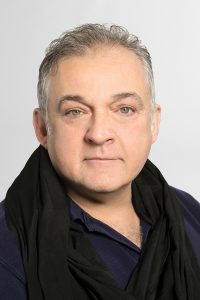
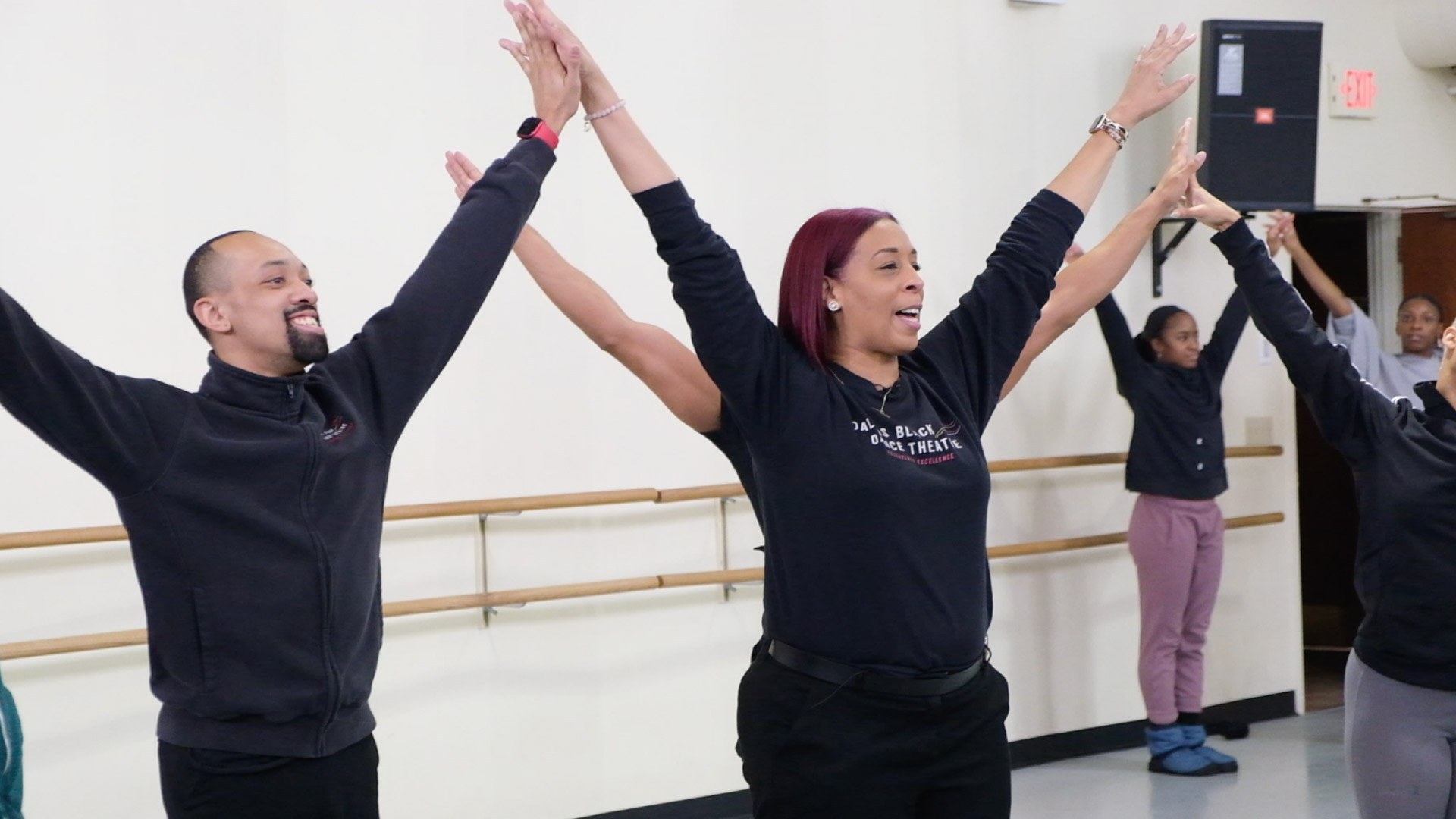
Often, as dancers, we have a choice to take up space with confidence or feel defeated and hold back. Our guest on today’s episode is one that continuously chose to take up space and inspired others to follow their intuitions, pursue what they love, and embrace their curiosity. This is an inspiring interview with the Artistic Director of Dallas Black Dance Theatre (DBDT), Melissa M. Young. Our conversation with Melissa is incredibly touching as she talks about why she loved the exploration of dance and remembers certain key impressions that impacted her greatly throughout the years. She tells us why she always chose to dance to the beat of her own drum and why she pursues uncovering herself in the most authentic ways before sharing about her time spent in New York City and how she ultimately ended up dancing at the Dallas Black Dance Theatre. She’s an amazing individual with a passion for dance and holds the responsibility of being an artistic director with such fervor. Tune in now to hear about the pure joy derived from Melissa’s life in dance. Enjoy.

Key Points From This Episode:

  • Melissa talks excitedly about who she is and where her love for dance ignited from.
  • Why she loved the exploration aspect of dance.
  • She talks about the impact of The Stack-Up by Talley Beatty (Alvin Ailey) on her life’s journey.
  • Melissa remembers taking a class from Donald McKayle and the impression it left on her.
  • Why Melissa never put a timeline on her career and allowed the journey to flow.
  • The pull to New York and the blossoming opportunities to do as they were doing at Ailey.
  • She shares thoughts on her firm belief in doing what you see for yourself.
  • Navigating the shoulds, the coulds, and the woulds, and why she chooses to dance to the beat of her own drum.
  • What you see is what you get: uncovering herself in the most authentic way.
  • How the culture shock of moving to New York City made her feel more alive.
  • We hear about her time spent in New York at The Ailey School.
  • How she came upon the DBDT audition notice and took a chance.
  • How her journey at DBDT has allowed her to discover herself.
  • What it was like to move to Dallas: another culture shift.
  • She shares information regarding the current dance and art scene in Dallas.
  • The DBDT and her journey with the company.
  • Her thoughts on the culture, dynamic, and community at DBDT (as a dancer and as staff).
  • How she transitioned from being a dancer to a staff member after 10 years of performing.
  • Looking back at her career, she reflects on some challenges she’s faced and overcame.
  • How she approaches being the artistic director at DBDT (and any role she’s ever filled).
  • Things that are sparking excitement in Melissa for the future.
  • Why she looks for great human beings first when looking at prospective dancers.

“What I love about dance is I look at it like professional problem-solving. The choreography is the problem and the equation of how you get there working with everyone else, that’s how you get to the “answer”.” — Melissa M. Young

Melissa M. Young is a Honduran American raised in Santa Ana, California. She attended Orange Coast College with a focus in Business Administration. She is a graduate of The Ailey School—The Official School of the Alvin Ailey American Dance Theater in New York City. During her Fellowship studies, she was one of five students selected to train as an exchange student at Amsterdam University of the Arts in the Netherlands.

Melissa is celebrating her twenty-ninth season with Dallas Black Dance Theatre (DBDT). Young started her career at DBDT as a dancer for eleven years, then moved up the ranks as Rehearsal Director, Academy Director, Associate Artistic Director, Interim Artistic Director, and was appointed as Artistic Director in September 2018. Her most notable performances include The Kennedy Center, Lincoln Center Out-of-Doors, and for the U.S. Ambassadors to Ireland and Zimbabwe. She has restaged and rehearsed the diverse repertoire of DBDT, which spans over 100 ballets. She was an Assistant to the Choreographers, Hope Clarke for The Dallas Opera’s Porgy and Bess and Christopher L. Huggins for Dallas Theater Center’s production of The Wiz. Melissa is most proud of thoughtfully leading DBDT through the pandemic by using the many restrictions as a guide to push the boundaries of her imagination into a creative reality.

Teaching master classes both nationally and internationally, Melissa specializes in the Dance Technique of Lester Horton. She was the primary Horton Technique Instructor for the Dallas Black Dance Theatre company dancers from 1998-2017. As an Adjunct Instructor, she has taught at Southern Methodist University, Texas Woman’s University, and Abilene Christian University. Over the years, she has led several movement workshops for Leadership North Texas and Leadership Dallas.

Melissa is a graduate of the Leadership Arts Institute, Class of 2022, a program of Business Council for the Arts in Dallas County. She is a member of the International Association of Blacks in Dance, Inc. Melissa has served as an advisory panelist for arts organizations that include the City of Dallas Office of Arts and Culture, Texas Commission on the Arts and Mid Atlantic Arts Foundation, and is a former board member for the Dance Council of North Texas.

Melissa was presented with The Dancer’s Award in 2000 for her artistic excellence and dedication to Dallas Black Dance Theatre. She was chosen as one of “The Talented Tenth” by The Dallas Weekly in 2010, for being a Young and Emerging Leader. In 2014, she received an Award of Recognition from the South Dallas Dance Festival for her service to dance and in 2016, the Natalie Skelton Award for Artistic Excellence. In 2017, Melissa received the Shining Star Award from the Texas Association for Health, Physical Education, Recreation and Dance for her significant contributions to dance in Texas and beyond. During the 57th Annual South Central District Conference of the National Association of Negro Business and Professional Women’s Clubs, Inc. in 2019, Melissa was honored with the “We Speak Your Name” Career Achievement Award.

MSP 159: Susan Klein

By Podcast No Comments

PODCAST 159: Susan Klein

Release Date: 6.19.23

TO DOWNLOAD PODCAST OR LISTEN:

    • Apple Music: Subscribe, Listen, Rate Us HERE

    • Stitcher: Subscribe and Listen HERE

    • Spotify: Follow and Listen HERE

    • Any Smartphone Podcast app: Subscribe and Listen


Creating a Technique that Honors the Individual with Susan Klein

Episode 159: Show Notes

Today’s guest Susan Klein is a true luminary, having shaped the modern dance landscape with her groundbreaking theories as creator of the renowned Klein Technique. In this episode, we explore her transformative journey as a movement pioneer, uncovering her dance background, the hurdles she overcame following a series of debilitating knee injuries, and her return to the world of movement. We discover how her experience ignited her passion for understanding the body and teaching others about movement, and how this ultimately led to the development of the Klein Technique. Susan recounts the pivotal moment she realized the limitations of imitation-based teaching and explains why she believes in nurturing individuality within dance. She opens up about her quest to safeguard her unique contributions, and why she decided to concede, despite her concern about the potential harm of her work being taught incorrectly. Join us as Susan shares her unique journey to quietly becoming one of the most valuable and influential players in the modern dance field.

Key Points From This Episode:

    • Introducing Susan Klein, an “unsung hero of modern dance” and creator of Klein Technique.
    • Susan’s dance background and training.
    • Why she believes teaching through imitation to be ineffective.
    • Her influences and how they shaped her journey.
    • The series of knee injuries that temporarily derailed her dancing career and her return to dance, post-injury.
    • How Susan’s experience ultimately led to the development of the Klein Technique.
    • The importance of individuality in dance and Susan’s continued fascination with movement and teaching.
    • Susan mentions notable dancers she taught.
    • What drew people to her work in the modern dance field.
    • The various methods she attempted to protect her work from being copied.
    • Why she finds the widespread adoption of her work both gratifying and concerning.
    • Her journey of developing a technique class based on Laban’s principles.
    • Challenges she’s faced in her dancing career and the various career paths she’s explored.
    • Susan teases her plan to share her knowledge in book form.

“When I work with people, that’s always exciting because their potential and what’s going on in their lives or in their body is infinitely interesting.” — Susan Klein

Susan Klein is founder and director of the Susan Klein School of Movement and Dance.  She has been developing Klein Technique™ since 1972, teaching dancers to use their bodies correctly thus decreasing their possibility of injury and increasing their capacity and longevity as dancers. Her work has been most influenced by Barbara Vedder, D.C., Irmgard Bartenieff, Bonnie Bainbridge Cohen, Fritz Smith, M.D., and J.R. Worsley, D.Ac. Susan started dancing at 5 years old and by 19 years old was seriously injured. Klein Technique™ is a result of her personal journey to get well, and serves as a way for people to work through individual injuries, to understand the workings of their bodies, and to heal themselves. Susan has a private practice as a Movement Therapist, Certified Zero Balancer, Senior Zero Balancing Teacher, and Traditional Acupuncturist, L. Ac., M.Ac., B. Ac. (UK), Dipl. Ac. (NCCAOM).

Connect: KleinTechnique

Links Mentioned in Today’s Episode:


Podcast produced by: The Moving Architects
Interviewer: Erin Carlisle Norton
Movers & Shapers: Hope Mohr

By Podcast

PODCAST 158: Hope Mohr

Release Date: 6.5.23

TO DOWNLOAD PODCAST OR LISTEN:

    • Apple Music: Subscribe, Listen, Rate Us HERE

    • Stitcher: Subscribe and Listen HERE

    • Spotify: Follow and Listen HERE

    • Any Smartphone Podcast app: Subscribe and Listen


Activism, Dance, and Co-Leadership with Hope Mohr

Episode 158: Show Notes.

Dance, movement, performance, and art-making can play many roles in one’s life. And how they are expressed can change shape over the course of a career. Our guest today, Hope Mohr, has woven together a life of art and activism as a choreographer, curator, and advocate. She has had a fascinating career journey, dedicating herself to both dance and activism and finding new and innovative ways to integrate the two. We talk with Hope about the inexorable pull that dance has exerted on her throughout her life and how her feminist awakening in college inspired her activism. She tells us about the leave of absence she took from studying law (on more than one occasion) to pursue unmissable dance opportunities with legends like Lucinda Childs and Trisha Brown, and shares how she finally completed her law degree before founding a presenting platform called The Bridge Project. Hope goes on to describe the project’s transition to co-ownership, changing their name to Bridge Live Arts, why she chose to leave after 15 years, and what it’s been like returning to work as an independent artist after so many collaborative projects. Our conversation today covers urgent and meaningful topics, from dismantling existing power structures and redistributing power within dance to returning to yourself and learning how to listen to your inner voice as an artist. To learn more about Hope’s fascinating journey and bigger questions about dance and power, be sure to tune in today!

Key Points From This Episode:

  • Hope’s upbringing in San Francisco and her early love of dance and ballet.
  • An overview of the dance projects, companies, and training that Hope has been a part of.
  • The leave of absence that Hope took from law school to pursue dance opportunities (on more than one occasion).
  • Hope’s dedication to dance and activism throughout her career.
  • Learn about The Bridge Project, a presenting platform Hope started in 2010.
  • How the project transitioned to a model of co-leadership and was renamed Bridge Live Arts.
  • Hope’s decision to take the bar exam (and pass it) just before the onset of the COVID-19 pandemic.
  • Why Hope has continually found herself returning to dance throughout her life.
  • Her feminist awakening and how it led to her activism and work as a lawyer.
  • Reflections on the cycles of burnout Hope has experienced and what keeps her going.
  • How Hope moved back to the Bay area and started her own studio.
  • The focus of Hope’s work as a choreographer: motherhood and navigating the world as someone who identifies as female.
  • An overview of the curation and collaborative work Hope has done for Bridge Live Arts.
  • What informed Hope’s decision to move away from Bridge Live Arts; tending to herself as an artist and making space for a more equitable distribution of power.
  • Locating these changes in the bigger, national conversation around a redistribution of power, race, equity, and co-leadership in dance.
  • The need for grants and other means of support to fund a transition to co-leadership.
  • Hope’s return to being an independent artist and her latest new work.
  • The most significant challenges Hope has faced in her career, along with her biggest highlights.

“I think I’ve always had a very hungry mind and a real passion for social justice work. So that has been a throughline. But dancing has always been my first love. So yeah, it’s been a real calling for me. It still is.” — Hope Mohr

Hope Mohr (she/her) is an artist and advocate.

As a choreographer, Mohr makes work that “conveys emotional and socio-political contents that ride just underneath the surface of a rigorous vocabulary.” (Dance View Times). Her performance work has been presented by Movement Research at Judson Church (NYC), 18th Street Arts Center (LA), Highways Performance Space (LA), Johns Hopkins University (Baltimore), di Rosa Center for Contemporary Art (Sonoma), Moody Center for the Arts (Houston), and in the Bay Area at SFMOMA, ODC Theater, Counterpulse, ICA San Francisco, 836M Gallery, and Yerba Buena Center for the Arts.

As a dancer, Mohr trained at S.F. Ballet School and on scholarship at the Merce Cunningham and Trisha Brown Studios in New York City. She performed in the companies of dance pioneers Lucinda Childs and Trisha Brown. While dancing in New York, Mohr also freelanced with Liz Gerring, Douglas Dunn, Trajal Herrell, and Pat Catterson.

In 2007, she founded Hope Mohr Dance (HMD). In 2010, she founded HMD’s presenting program, The Bridge Project. In 2020, she co-stewarded the organization’s transition to a model of distributed leadership. In 2022, the organization changed its name to Bridge Live Arts and its mission to creating and supporting equity-driven live art that centers artists as agents of change. In 2023, Hope transitioned out of Co-Directorship and into Affiliated Artist status with Bridge Live Arts. She now works as an independent artist fiscally sponsored by Fractured Atlas.

Hope teaches contemporary dance technique, creative movement, movement for actors, and cross-disciplinary practice that puts dance in dialogue with visual art. She has taught at PARTS (Brussels), the Trisha Brown Studio (NYC), 18th Street Arts Center (LA), and in the Bay Area at Stanford University, American Conservatory Theater, Shawl-Anderson, ODC, and the Lines Ballet/Dominican B.F.A. program.

Links Mentioned in Today’s Episode:

Hope Mohr

The Bridge Project

Bridge Live Arts

Shifting Cultural Power: Case Studies and Questions in Performance

San Francisco Ballet

Merce Cunningham Trust

Lucinda Childs

Liz Gerring Dance Company

Pat Catterson

Douglas Dunn + Dancers

Movement Law

Trisha Brown

Trisha Brown Dance Company

Margaret Jenkins Dance Company

Cherie Hill on Instagram

Karla Quintero on Twitter

Rebecca Fitton on Instagram

Anne Carson

Antigonick

extreme lyric I

Bacchae Before

Leaving the Atocha Station

Horizon Stanzas

Have We Come a Long Way Baby?

Locus Poem

Bay Area Artists In Conversation with Merce Cunningham at 100

What does it mean to have a radical body?

Dancing Around Race: Interrogating Whiteness in Dance

Community Engagement Residency


Podcast produced by: The Moving Architects
Interviewer: Erin Carlisle Norton
Latest Events

Check out the latest upcoming events.

Booking

Get in touch and book The Moving Architects.